Dishmom
The Story Behind Dishmom Imagine living in a vibrant residential society, craving home-cooked food but not having the time or skill to prepare it. Meanwhile, talented home chefs within the community are passionate about cooking but lack a structured way to share their meals. Dishmom was born from this very idea—a hyperlocal food delivery platform that connects society members, allowing home chefs to sell delicious homemade dishes while others conveniently order them. Dishmom isn’t just another food delivery app; it’s a community-driven initiative that fosters connection, supports local talent, and ensures that every meal feels like home.
Role:
Product Designer
Industry:
Food Services
Duration:
2 Months
1. Brand Identity Alignment
Despite the increasing popularity of food delivery services, a significant gap exists in homemade food accessibility. Key issues include:
Lack of platforms exclusively for home chefs.
High commission fees on existing food delivery platforms.
Difficulty in discovering and trusting local kitchens.
No direct interaction between customers and home chefs.
Unstructured order management for home kitchens.
2. User-Centered Experience
Dishmom offers a zero-platform-fee model (limited-time) for home chefs, allowing them to set up their virtual kitchens, manage menus, and receive orders seamlessly. Customers get access to home-cooked meals from verified chefs within their own society, making food delivery faster, healthier, and more personal.
Design Process

3. Design System
Target Audience
Dishmom serves two primary user groups:
Home Chefs – Individuals passionate about cooking, including homemakers, retirees, and part-time chefs looking to monetize their skills.
Customers – Busy professionals, students, and families who prefer homemade food over restaurant meals.
Framing the 5W’s and 1H Questions
To deeply understand the problem and user needs, we structured our research around the following questions:
Who are the primary users?
Individuals who crave home-cooked meals.
Home chefs looking for a reliable platform to sell food.
2. What problem does Dishmom solve?
It connects home chefs with consumers seeking homemade food, ensuring quality and hygiene.
3. When do users typically order food from home kitchens?
During lunch and dinner hours, on workdays when they lack time to cook, or when craving homemade specialties.
4. Where do users look for home-cooked meals?
Online food delivery apps, social media groups, or local vendors.
5. Why do people prefer home-cooked food over restaurant food?
It is perceived as healthier, fresher, and free from excessive additives.
6. How does Dishmom streamline the process of ordering from home kitchens?
By offering a simple interface for browsing nearby kitchens, placing orders, and making secure payments.
🔍 Key Findings from Research
⚡ Speed Matters
Users expect quick delivery, especially when ordering daily meals. Long waiting times reduce trust and discourage repeat orders. The expectation is clear: if it’s from within the society, it should feel faster than ordering from a restaurant.
“If it’s coming from my next building, why should it take 45 minutes?”
🧠 Simplicity Wins
Many users, especially home chefs, feel overwhelmed by complex food delivery apps. They want intuitive interfaces with minimal steps — especially for managing dishes, responding to orders, and tracking payments.
“I’m here to cook, not manage a full-blown app like a restaurant!”
🍽️ Customization is Key
Users want to personalize their meals — less spice, no onions, extra gravy, etc. A section for adding cooking preferences while ordering greatly enhances user satisfaction.
“Sometimes I just want dal without tadka. That option would be great!”
👥 Trust is the Foundation
Knowing the chef’s name, face, or rating creates a sense of connection. It helps build long-term loyalty and repeat orders. Locality-based trust plays a huge role in food decisions.
“When I see Aunty from B Block cooking, I’m more comfortable ordering.”
👀 Visual Appeal Matters
First impressions are everything. High-quality dish photos and a clean layout build appetite and trust. People tend to order more from kitchens with well-designed menus and inviting visuals.
🔁 Daily Use = Daily Updates
Many customers want to know the daily available dishes from kitchens — something different every day. They prefer menus that change and feel “home-style” over static restaurant-like lists.
🕒Behavioral Insights
Users primarily order homemade food during lunch and dinner hours on weekdays, suggesting the need for time-optimized kitchen operations and real-time availability updates.
🔍Discovery Patterns
Many users currently rely on scattered sources like WhatsApp groups or word-of-mouth. Dishmom centralizes this experience, making it easier to discover and trust verified home chefs.
❤️🥗Emotional and Health-Based Motivation
People perceive home-cooked meals as more hygienic, healthy, and emotionally satisfying compared to restaurant food.
Our research helped us identify real-world expectations and bridge the gap between traditional home cooking and modern convenience. Dishmom aims to go beyond just solving logistical problems — it’s about crafting a platform that feels personal, comforting, and truly made for the community.
4. Typography & Readability
In our journey to build Dishmom, a platform rooted in authenticity and home-cooked warmth, we took a step back to understand the landscape we were entering. This meant analyzing the giants — Zomato, Swiggy — and niche players like Homefoodi. While these platforms dominate the food delivery market, we noticed clear gaps when it came to connecting users to the heart of food — home kitchens.
1. Zomato & Swiggy – Convenience Over Connection
Zomato and Swiggy have set the standard for convenience, speed, and variety. With a vast number of restaurants and delivery fleets, they’ve made ordering food almost effortless. But here's where Dishmom saw a gap:
Lack of Homely Food Options: Despite thousands of restaurants, users still miss the taste of “ghar ka khana.” The available "home-style" meals often come from commercial kitchens rather than actual home cooks.
No Space for Home Chefs: There is no dedicated onboarding process for home-based chefs who want to sell their dishes without running a full-fledged restaurant.
Disconnected Experiences: The experience is transactional. There’s little story behind who cooked your meal, their journey, or the warmth they bring to your plate.
2. Curryful – A Cultural Concept with Constraints
Curryful promotes traditional South Asian meals and offers a more regional, curated approach. It shares some of Dishmom’s vision — cultural connection, local cuisines, and authentic flavors. However, we noticed key limitations:
Limited Flexibility for Chefs: While Curryful helps chefs offer fixed menus, there’s little scope for spontaneous cooking or receiving special dish requests from nearby residents.
Restricted Communication: Customers can’t directly connect or engage with chefs. The food becomes just another item, rather than a personal, soulful experience.
Scattered User Experience: Users often felt lost when navigating the app. The emotional storytelling around food was present, but the usability needed refinement.
Where Dishmom Stands Out
Dishmom isn’t just a food delivery platform — it’s a community-driven experience that celebrates home chefs and their stories. Here’s how we differentiate:
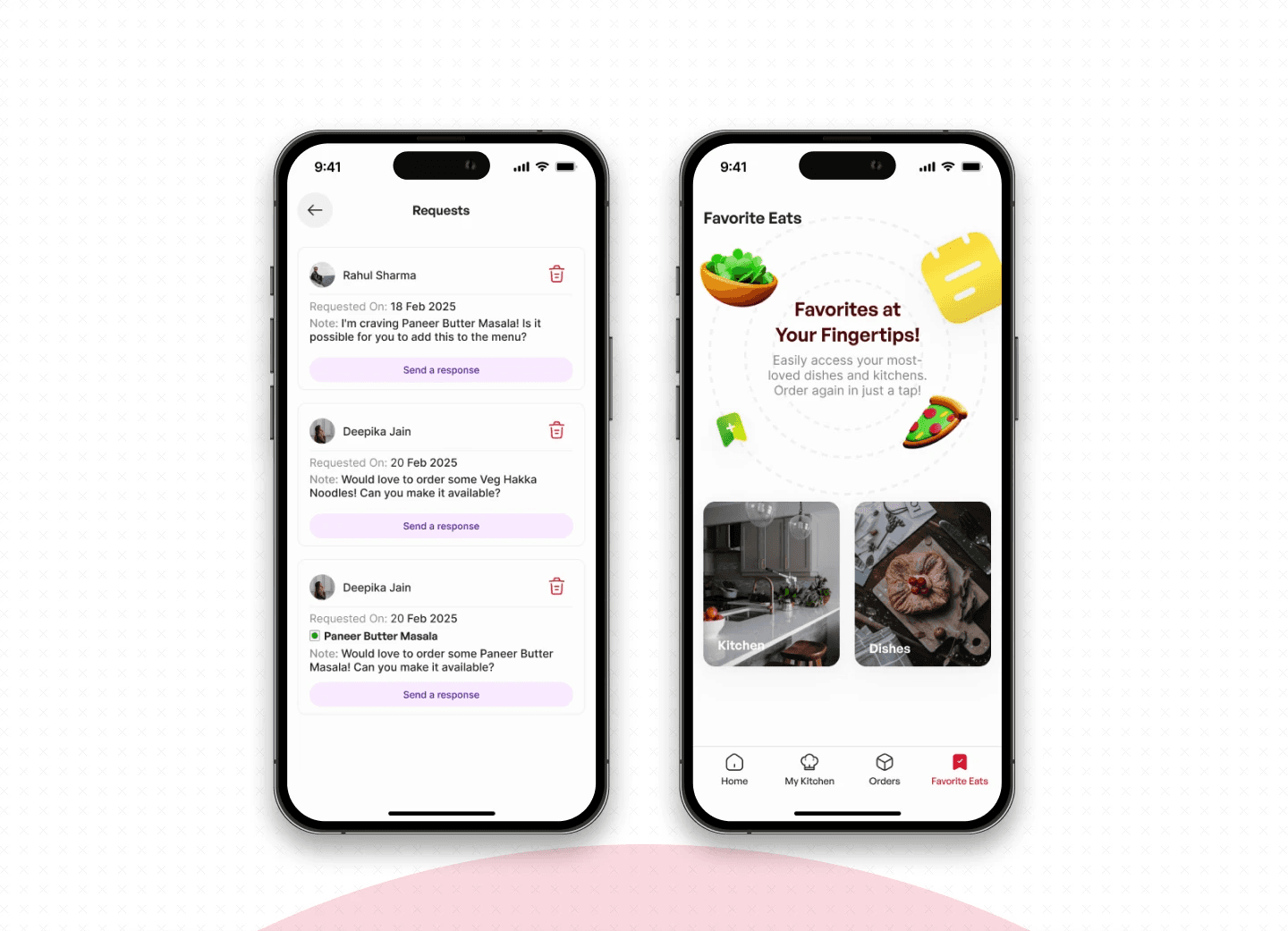
✅ Request-Based Cooking: Users can send personal requests like “Craving Rajma Chawal like mom makes” — giving chefs the option to respond with love.
✅ Chef Stories & Bios: Every dish has a story. Dishmom lets users connect with the person behind the food — their background, specialties, and why they cook.
✅ Seamless Kitchen Management: From setting quantities to marking dishes out of stock, home chefs have full control with minimal effort.
✅ Community-first UX: The interface is built not just for transactions, but for warmth, discovery, and interaction.
Competitive Feature Comparison Table

🧩 Final Thought
Dishmom is redefining community-based food sharing by empowering home chefs and providing customers with authentic homemade meals. Moving forward, we aim to:
Expand to more societies and partner with local communities.
Introduce a subscription model for meal plans.
Enhance AI-based recommendations for personalized meal suggestions.